
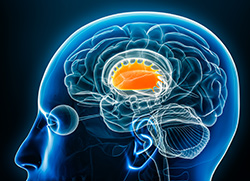
 We will examine the infectious and non-infectious triggers behind this process — strep, Borrelia, Mycoplasma, Bartonella, Babesia, and common viruses among them — and how, through molecular mimicry, they can prompt antibodies that cross the blood-brain barrier and interfere with brain function.
This webinar will then focus on clinical decisions that follow. We will examine which patients warrant antineuronal antibody testing and which do not, how the Autoimmune Brain Panel’s five biomarkers map onto specific symptom clusters, and how to interpret results in the context of history, examination, and infection workup.
Detailed patient case studies and long-term outcome data will be shown, as well as published treatment evidence for use of immune-modulators, anti-inflammatory approaches, and anti-infectives — including response and treatment-prediction data from published series.
This webinar will conclude with practical guidance on monitoring: when to retest after each treatment modality, how washout periods affect titers, and how to use serial results to track recovery. For clinicians sending specimens through R.E.D. Labs: the goal is a usable framework as an aid in your diagnosis of an immune-mediated condition, select targeted therapy, and monitor treatment response biologically rather than by symptom impression alone.
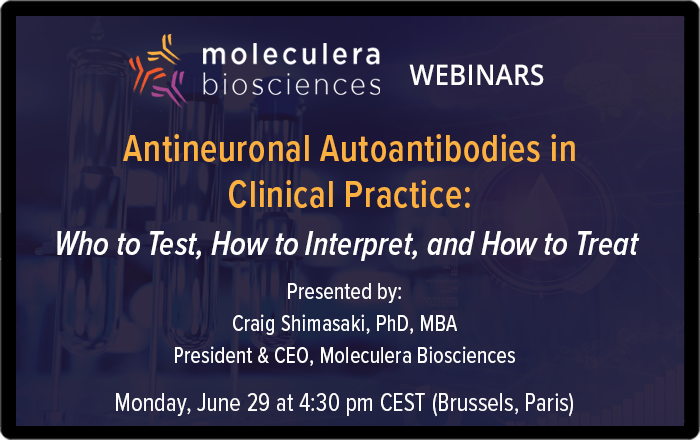
Craig Shimasaki, PhD, MBA
 Craig Shimasaki is President and CEO of Moleculera Biosciences, a neuroimmunology precision medicine company focused on identifying underlying roots of neurologic, psychiatric, and behavioral disorders triggered by an autoimmune response. He is a medical research scientist with over 35 years of translational development experience in biochemical interactions, molecular biology, viral pathogenesis and infection-triggered neuropsychiatric disorders.
Dr. Shimasaki has worked at all stages of research and development from bench to bedside. His research included epitope mapping of HIV proteins, genetic based risk predictors of breast cancer, influenza and RSV diagnostics and therapeutics and pathogenesis of infection triggered neuropsychiatric disorders. As a businessperson, he co-founded multiple companies and led multiple products through the FDA approval process and is a co-inventor on multiple patents.
Dr. Shimasaki started his career at Genentech. He received his BS in Biochemistry from University of California at Davis, his PhD in Molecular Biology from the University of Tulsa, and his MBA from Northwestern University, Kellogg School of Business. He is an Adjunct Professor at the University of Oklahoma where he teaches biotechnology entrepreneurship. His passion is to help translate scientific and medical discoveries into acutely needed products so that more patients can live healthier lives.